Sunday, November 26, 2006

Cabbages and Quality Day


To top off the 60 mealies (corn plants), 30 tomato, 30 beet root, 10 spinach, 4 beans, pumpkin, cucumbers, radishes, lettuce, basil, thyme and parsley planted two weeks ago, Farmer Bond and his wife planted 80 cabbage seedlings this week. The pharmacist for the hospital arrived with a tray of 200 seedlings Monday that needed to be in dirt ASAP or their roots would die. We quickly dug holes in some poorly prepared furrows and went to work. After getting 80 plants into the ground before the roots died, we were done and it was time to hawk the rest of the beautiful cabbage newborns. So if you come to visit us at Mountain High you will see cabbage lurking everywhere. Cabbage and mealies are the two popular staples of the Zulu diet-they are delicious when prepared by the right Zulu cook and find their way into almost every meal.
The big event of the week was the chance to trek out the back roads to the annual “Quality Day” for the Health Department Hospitals in the Zulu region. This was my first experience with the government bureaucracy that runs the public hospitals. The event was held in the auditorium of a community college near the regional government center. Every hospital was invited to design a booth touting their quality accomplishments for the year. The day started out with 40 drum majorettes in yellow and blue satin uniforms and white fur hats marching in with drums and rock music blasting out the beat. Then a rousing choir sang a few Zulu four part harmony renditions. The two hundred attendees rose and sang and danced in rhythm. Not your typical government meeting in the US but a lot more fun. The director of Mountain High Hospital had been invited to open the meeting with a prayer and a welcome. So a few days before the big day he asked me to find a Bible verse appropriate for quality improvement-Every Day is Quality Day. Fortunately a verse in Philippians talks about not being perfect yet but striving. Coming up with words of welcome was easy as all those years working in quality systems finally paid off with many platitudes remaining on the hard drive. So don’t be surprised at the variety of tasks that you may be performing in the Peace Corps. The old cliché about reinventing the wheel should be restated that the “wheel just turns and the same old things just churn out.” We all had a great time at the event even though the awards presentations went on for hours and lunch wasn’t served until 3pm. Some of the hospitals are even more remote than Mountain High but their dedication and competitiveness was apparent as I observed one key person in each group taking charge and making their hospital come to life through the displays and interaction with passersby. South Africa is full of talented educated African professionals that are very capable. They certainly are challenged with drug resistant TB a major player in this area and at least 11 national languages to deal with.
The drive back from Quality Day was a pleasure as we took the extreme back roads that pass by the Zulu King’s compound. The Zulu King is a direct descendent of Shaka. With his Oxford education and stately bearing, he is well respected in the area. In Sept. dances are held at the compound where the public is invited. A topic of conversation in the car was whether one should take their daughters to participate as the king can select any young dancer to be his wife. Something to think about!
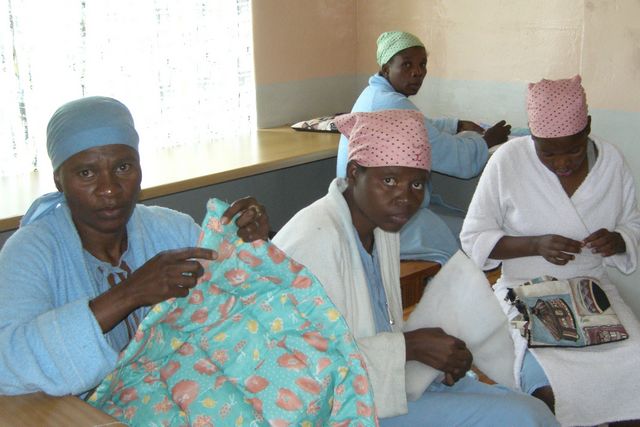
Today, Sunday, we were introduced to our church at the Christmas play. I brought two Zulu rag dolls and the ubuntu quilt made by Mountain High patients to show the children. The dolls are named Cindy and Cindewe, names used for twins by the Zulus. The dolls created quite a stir among the ladies and raised many offers of support for craft materials so maybe all the trips to the fabric stores with husband in tow are coming to an end. It is very gratifying to walk around the hospital and see the patients busy with their projects and wearing some of their creations. The tailor has been cutting out snappy T shirts, tank tops and clothes pin bags for hand sewing. The Quality Day event gave me more ideas for crafts including weaving pieces of colored yarn into discarded mealie bags for wall hangings with Zulu designs. A multitude of projects can be made from plastic bags which are woven into mats or baskets. The skies the limit!!

Sunday, November 19, 2006

Weather Blues and Wiry Fun


19 Nov. 2006 Blog

This week before American Thanksgiving was full of wet stormy weather, a little bit of cabin fever on those stormy days, some serious farming and a few successes in starting the men on appropriate craft projects. We are deep into the rainy season which means heavy LA style rainstorms accompanied by thunder and lightning. The air temperatures are warm but the heavy mist and moisture make a beach loving So Cal Gal feel chilly in the roost in the sky. The skies brightened one day so we took advantage and made furrows in the plowed field for cabbage and planted radishes, cucumbers, eggplant and carrots. What an indulgence to be limited only by one’s energy and the seeds that are available instead of the land! However, hoeing, pulling all the clods and grass is hard work and the limitlessness of the fabulous soil only reinforces the frailties of the body. Farming is a pleasure after minding the hospital business all day while hearing the beguiling birdcalls just outside the windows of the office.
The men were a little skeptical when they were given wire, fine copper, wire cutters and pliers to start some handwork on Monday. I gave them prototypes of crafts that had been purchased in gift shops in Vryheid made from wire and beads including darling butterflies, lizards, baskets fashioned from colored telephone wire, and star-shaped key chains. The men live 8 to a ward with four beds on each side and a nurse’s stand in the middle of the room that looks down the 1000 ft drop to the valley and the ancient Zulu head formation in the rocky cliff. Some of them never look up and are so thin they can barely hold up their pajamas. However, a few were slightly interested, including the tailor, a handsome man in his twenties from Durban and a young 14 year old boy. The young man looked at the materials, quizzically turned his head and asked if he could make autos out of the wire. With this request, I was ecstatic, since the homemade wire cars with infinite details and features are the one toy that you see everywhere in Africa. He rounded up the 14 year old and they got busy bending, twisting and then scrounging the hospital grounds for the requisite wheels, mirrors, Mercedes symbols and trailer hitches in miniature. The handwork is not a two hour session in occupational therapy but a compulsion for these men. As soon as the materials are distributed, the patients begin to work and are engrossed until the craft is complete, albeit in their own way. The darling and “way too precious” objects that were for sale in the fine arts stores had little appeal to the patients, but their own ideas were original and fun for them. Likewise, some pink knit fabric that had been purchased for hats for the women was a bust, but a 16 year old girl sewed buttons and fringe unto the hat and made a bustier that suited her to a T and gave everyone a good laugh. We are all learning what works and what doesn’t. However it is gratifying to see the women throughout the hospital and grounds knitting, crocheting, sewing and chattering. Next week’s agenda includes a collage with stuffed cloth butterflies, lizard and bugs, aprons to sew and pillows from assorted African fabrics. It is interesting to note how the Peace Corps draws on skills mainly learned before the age of 10! The women were clamoring for foam stuffing for their pillows so Brendon and I were certainly a site hiking the 2 km in to the hospital on the dirt road today (our regular taxi driver did not show up for our return from Vryheid) laden with 2 large bags of foam stuffing, one meter of batting, 10 meters of fabric, groceries, perishables, books, clothes for church, backpack and laptop. We weren’t fazed a bit except about halfway through the trek home, I noticed Brendon dribbling bits of colored foam scrap out of the bag just like Hansel and Gretel. He certainly has been good natured about all of the visits to the fabric stores which may have to be curtailed until Mr. Zulu returns to the taxi run down the 2 km drive into the hospital.
On a sadder note, we attended a funeral this week for an American women who served in the Peace Corps in Liberia in the 80’s and has since worked in social projects throughout the world, especially for vulnerable children and orphans. We had lunch with her last weekend in a serendipity moment as we saw her at a lovely outdoor restaurant near our bed and breakfast and joined her. She expressed some of her ideas for teaching lifeskills to the children taking care of younger children and discussed the African idea of keeping orphans in their village. The AIDS pandemic in Africa is hitting the breadwinners and parents, leaving the children behind to fend for themselves. This problem will continue for many years and is truly a handicap to this blossoming nation. The children of Africa deserve a great deal of respect as they manage to cut the wood, chase after the cattle and goats with a stick, cook the food, fetch water that may be several kilometers away, purchase kerosene for the cookstoves and take care of babies in the family. They are not coddled like American children, have no books or toys for their entertainment, but are courteous, respectful and well behaved. (at least in the rural environments that have been our experience). Their potential is as wide as their beautiful smiles. However, AIDS and lack of access to educational facilities has shrunk their opportunities for the life that utilizes their potential. Well, Goodbye Faye and Rest Assured that your hard work will continue to make amends to the children and open up opportunities for their future!
Happy Thanksgiving to our friends and family! We are thankful for the support from all of you and for this opportunity to learn and grow. God bless you all. We do not feel deprived in any way, especially since it is Spring here and Summer is rapidly approaching. The stores are beginning to stock the plum pudding, Christmas crackers, and holiday bling but they are absent the recorded music and frenetic consumer atmosphere. So it feels like March to us with June around the corner. See you at the Beach!

Sunday, November 12, 2006

Sewing Sighs

11 Nov. 2006

Tonight is Saturday night and we are spending it in our cozy flat at Mountain High with the mist hanging like pea soup and the wind whistling through the windows on three sides of our living area. We traveled to our home town, 80 km by taxi van, today, to get groceries and managed to return on the only local taxi at 1145am with packages of cheese, meat, vegetables, pasta, onions, garlic, ginger, candy (for emergencies) and loads of fabric, yarn, crochet hooks, knitting needles, wire and wire cutters for next week’s craft projects with the patients. We left the mountain at 6 am this morning, watching the village women load long bundles of cut trees onto their heads (twala) for carting down to the village for cooking and heating. Our taxi driver, Mr. Zulu, is infinitely polite but expectantly hands a lotto card to Brendon each week, hoping that the Umlungu (the whites) will provide winning numbers. Alas, although Brendon does his best at picking the lucky numbers; each week has been a bust. We leave Mountain High at its misty moisty best and travel down through the forests, rocky landforms, termite hills and hillside kraals (farms) to lower ground with sunny skies. We arrive around 7 am every Sat morning when the shops are still closed but we are country people with big eyes for the delights of the small town and hit the post office looking for mail and sometimes the lone coffee shop for a cup of real coffee and a sugar filled crepe for 1 and a half rand (ten cents). By 8 or 830 the shops open and we have a big list but small carrying capacity for the items to get us through the week and serve as recreation and therapy for the patients at Mountain View. The town looks like a small town in the San Joaquin Valley with its version of department stores, drug stores, and grocery stores but amazingly has 5 fabric stores as the local residents are excellent seamstresses. Thus I am cultivating relationships with the shopkeepers who wonder why this crazy American woman (with husband in tow) is looking for bunting, buttons, patterns and cheap cotton.
The week had some highs and lows. After the great start with the ancient blue Ganda Ganda Tractor coming to life, the sewing project had a day of isipithipithi (chaos or confusion). Tuesday started out on a very positive note as the women and men gathered to work their quilt, bootie, and tote bag crafts and were interrupted by the hospital director announcing that we had a visitor. Graham Root, a founder of the Itahla Game Preserve, former game warden, author of many South African books (including one where he adopts the mindset of a Rhino and Ostrich) and current operator of a game preserve, arrived at Mountain High to meet the Americans and proffer advice on gardening and Zulu crafts. This was an exciting event as Graham Root is a cult figure in these parts and understands Zulu. We had heard his name since our arrival in Zululand and wanted to get his advice about how best to proceed to find culturally sensitive craft projects, especially for the men. I left the sewing group to show him around the garden, have tea and pick his brain about gardening and craft ideas. He had lots of good advice about crops and crafts. By the time I returned to the TV room used for sewing, I was upset to see that almost all of the fabric had disappeared as well as the thread and scissors. This was a big blow as there were no projects for the next day and I was disturbed that the patients would not show more respect for the ownership and distribution of materials. Even the binding material for our group community quilt, which was to be hung in the maternity ward, had disappeared. I was angry and mad at myself for not safely putting the fabrics away before taking off on the tour with Graham Root. That night I was sleepless trying to think of how to make a program happen the next day and finally remembered an extra blue plaid sheet that I had brought to South Africa with our sleeping bags as bedding for the initial training. So we could at least make quilts out of old sheets just like our ancestors used to do. I have previously joked with the patients that my husband’s grandmother made quilts out of her husband’s underwear and that this was considered “Art”and hung on the wall of our home in Palos Verdes.
Wednesday morning arrived and I was in a sour mood as I arrived at 1030am in the TV room with my dirty sheet to try to make a craft program happen. I could not find the 3 meters of bunting that had been purchased to fill the quilts and immediately suspected that it had also been lifted. A nurse came in and scolded the patients for absconding with all of the fabrics, thread, bunting and scissors. To flame my anger, one of the women walked in with the green fleece fabric just wrapped around her head in twala with no sewing or any effort, just a warm fabric to ward off the chill of the day and add a little variety and fun to her life. The women sensed my anger and started bantering among themselves and talking with the nurse. The women with the green twala walked out and returned with the modest induku (head scarf) she had made the week before. My angst about materials disappearing was wrecking havoc on the budding relations that had been forming with the women and the incipient program for patient therapy. The patients were anxious, I was unhappy and the needed patient recreation therapy was hassle for everyone with many misunderstandings. After locating the bunting in my flat and apologizing to the patients, I started cutting the blue plaid sheet so that the women could continue their quilts and we finally had some enjoyable work going, albeit with a rocky start. The patient that had stashed the green fleece willingly gave it up so that another women could make booties and a patient’s secret hoard of heavy tote bag fabric was shared with a new patient who wanted to make a bag. Peace returned!
Thursday arrived with some trepidation as to where the sewing projects were headed and my realization that more support was needed from the hospital and community to keep our craft time going. I arrived in the TV room early and did my usual “Jabulele” (Happy Time). Within a few seconds, all of the angst and negative thoughts about the sewing program disappeared as Zenile, a young 16 year old girl, walked in with two folk dolls, made out hoarded fabric scraps, wrapped in the pink patchwork quilt she had made. The dolls were wonderful examples of folk art with their stitched heads, tall green Zulu hats, breasts, skirts and Zulu print leggings. Zenile will be in the hospital for 3 months; her mother is in a hospital somewhere in Durban. Zenile cuddled the dolls as if they were real babies. Maybe the best work comes from letting go and freeing others to create beauty. An additional surprise that morning was the tailor’s creation of an intricate cosmetic bag designed from scraps of the Zulu printed fabrics. The fabric with the Zulu shields, three legged pots and rondavals was matched with an African geometric print and lined in grey taffeta. His first statement was a request for a zipper to sew into the carefully made folds to close up the cosmetic case.
As you can see each day has its charms and challenges but also a huge bequest of love and kindness from the Zulu community. We are seeking ways to make the projects sustainable and representative of Zulu culture. The garden has sprouted and many hours were spent leveling the large field that was dug up by the ganda ganda. The seeds are here and it is time to plant, hoe, rake and weed!

Monday, November 06, 2006

Ganda Ganda-Let It Rip!!

6 Nov. 2006

Well, today was one of the most exiting of my Peace Corps experience and maybe one of the most gratifying of my life. Late this afternoon, the Mountain High tractor rolled down the road from its ancient burial site and charged into action on the beautiful farmland in front of our home. The driver cautiously watched every inch forward and religiously turned to clean the weeds and debris off the blades. The Zulus call the tractor the Ganda Ganda and all I could think of was Granda Granda. Brendon and I have been struggling for three weeks to plow up the one acre plot with a shovel and fork but have only a few pitiful squares to show for our efforts. Today our plan was to weed our small plot with tomatoes, beans, parsley, lettuce and delicious herbs (basil,thyme and parsley) and plant the mealy (corn) plants in the larger square. We have been given lots of advice about farming this beautiful soil which is endowed with loads of rain (plus the dramatic thunder and lightning shows here at the top of the mountain with a chaser of mist and rain) and the perfect mix of clay and sand. Our pharmacist had promised mealy for any dirt we could turn up. Low and behold a team of local men worked on the tractor and brought it to life. We started this garden project as a way of providing food and entertainment for ourselves with a small hope that it would catch on. Now comes the hard problem of what to plant, how to encourage work, how to get a governing body for the garden that will make the decisions and distribute the food. There are plenty of takers for food in the area; besides the obvious patients, employees and residents in the small village 1000ft below the hospital there are the 60 boys boarding at the high school that cook their own food and are cared for by one adult. I give them credit as they are always well dressed and appear well nourished. I don’t know how they do it without a fast food restaurant or grocery store nearby. So this has been a tentative step forward. We are testing the waters with foods that are enjoyed by the locals but have only seem limited steps that they want to jump in and make this food factory happen. They have been handicapped with the grief and subsequent mourning from the many AIDS funerals we have experienced lately among local residents and employees and are probably unsure as to our motivations.
Ironically we watched a recent video about Mountain High in the 80’s where the facility raised animals, manufactured candles, grew their own food, ran the schools, clinics and hospitals. Today the site has lost some of its self-sufficiency but is on the way back with a visionary African leader who wants to take advantage of the bountiful resources.
The last week was more productive in terms of our efforts to provide meaningful activity for the patients and contribute to the management of the hospital. Although, the patchwork quilts were a limited success as they are not part of the Zulu culture and some women complained that cutting the small squares was too time-consuming (although that was the point and this is an artistic creative endeavor) we have been sewing booties out of fleece fabric. The nights (and some days) are very cold here at Mountain High and the patients are looking for warm apparel. Thus the booties were an instant hit. We started off with fleece in a beautiful butterfly pattern where I cut sock shapes out of a cardboard pattern and examined the patient’s feet to estimate the size. The day was warm when we started so I moved the women out to the beautiful garden to sew. Lo and behold a Man showed up who said he wanted to make the booties. I was thrilled and gave him some booties to sew. I was concerned when he did not tie a knot in the thread and he indignantly responded that he was a professional couture tailor from Durban and he certainly knew how to finish and start seams. He graciously forgave my ignorance and by today he was cutting out red fleece booties for all the men that could sew as well as adorable tall green fleece hats for his buddies who have very short hair and are chilly from the cold weather and the draughty wards. By nightfall the men and women were fighting over the spools of thread. The men were claiming that they deserved at least one of the spools and the women were hoarding the thread because of the old rule of possession. I was so happy to see some activity in the hospital and some joy in everyone’s life.
Friday was cooking day so this week we made Crazy Chocolate Cake, another blast from the 50’s. Unfortunately, crazy does not translate in Zulu (it means truly mad) but I asked the women patients to each have a joke in Zulu to make each other laugh. The only real laughs I heard was when I tried to Toy Toy (picture the Rockettes with an edge) to a South African liberation song Shosolooza and they all joined in. Soon even the patient who does not have the eyes to sew joined the group who were all singing and dancing and enjoying the day. Everyone loved the moist delicious cake which requires no mixing bowl, eggs, butter or milk but disappears in an instant after baking. Blest be those frugal cooks from the 50’s who passed on the recipes to Peace Corps volunteers who pass on a little American culture, whether it is a good idea or not. Next week maybe I will try Pizza, but better still would be to get the women to describe one of their recipes or practices from their culture. We are all still learning from each other! Brendon on the other hand has been given the task of a major programming job where he will use his skills from his aerospace job. Peace Corps has many manifestations which is great for us old timers where the past can also assist the present. All is not perfect in Paradise however, as we learned this week that new credit cards in the US that replaced expired credit cards had been maxed out and South African Airlines does not do business like US airlines. Apartheid has taken its toll on business, efficiency and trust that is required in an electronic society. Plus the small business matters in rural South Africa are intensely complicated without access to reliable phones, fax, post or internet.
Missing you all as I hit all the many fabric stores in Vryheid and try to figure out how to make this sustainable! (Thanks to our neighbor in Palos Verdes (Mrs. G) who provided the seed money for the fabric and hose to water the bounteous garden.)

Sunday, October 29, 2006

Quilting Bee Mountain High Style

Last week I left you in suspense as the “Mountain High Sewing Circle” was inaugurated with little fanfare but a lot of apprehension on my part. What if none of the patients liked the projects or wanted to sew? What if nobody showed up? What if the projects were too hard/easy/fast/slow/boring? What if my slapdash sewing ability did not go over in this country where an iron is a necessity, even for families without electricity. (By the way, Join the Peace Corps and you will probably need an iron). What if there weren’t enough needles, fabric, thread or patience (patients)? What if the patients didn’t know how to sew and didn’t want to learn? What if our projects interfered with the nurses and we are scolded for wanting to have a few laughs and fun in this hospital environment? Well, the week was generally viewed as a success because every day we had 10-15 women who left their beds to come and sew and join the fun. They were disappointed when I told them on Friday that we would not meet on the weekends as it takes all weekend for me to obtain groceries in this remote outpost. I believe that the blessings fell on all of us even though some of the projects were not culturally sensitive. The time was well spent and I got to know the women as individuals with lives, families, aspirations, boyfriends, vanity and an urge to embrace the future.
Monday, after advising the director of nursing of my intentions to start handwork (she is called the Matron), the nurses rounded up the willing and able to sit in the corridor on benches while I showed them the headscarf (induku) project and had them draw numbers out of a hat to determine who would get to select the first piece of fabric that would be hemmed. I had purchased 5 types of soft cotton in one of the many fabric stores in town and cut them into 50cm squares for hemming. We started with a prayer and hymn as all meetings do in South Africa, sacred and secular. The 17 women enjoyed selecting their printed or plain fabric and I was glad there appeared to be no “dog” in the selection. One of the patients is only 19 years old and she asked for PINK, just like the young girls in the US. After 2 hours most of the women had finished hemming their indukus and put them on their heads. Twala or wrapping the induku is an art in this country with double, twisted and formed roses appearing on the women’s necks. The best part of the morning was hearing the women chatter and gossip, comparing their lives and sewing abilities.
I was at a loss for what to do on Tuesday so I showed them embroidery stitches they could use on their induku to personalize it. So we had an embroidery lesson where we did initials and names on the induku from Monday. Most of the women came back for more. By Wednesday I was brainstorming to figure out what we could do with only some scraps of fabric left from the indukus so we cut squares and triangles and started working on a quilt for the maternity ward. The women seemed unfamiliar with the idea of patchwork but caught on quickly and enjoyed deciding between square or pinwheel designs for the final assembly. I told them that this was an Ubuntu Ingubo or Community Blanket as each women assembled a patchwork square of small triangles and then sewed them unto the larger quiltop.
By Friday, it was time to celebrate the week’s accomplishments so I dragged my hotplate into the hospital TV room and showed them how to make NO BAKE Cookies, a blast from the 50’s (Thanks to all those moms who taught us useful life skills and sent the NOBakes to camp.) South Africans are partial to sweets-Don’t ever try to work through their Tea Break at 10am. The sweets (candy to us) aisles in the grocery, sundry, housewares and department stores are enormous with many new delights that would charm any expat including chocolate covered turkish delight, nougats with real cherries and almonds, and tiny chocolates in the shapes of ballet slippers with pink decorations. However, good luck trying to find paper towels, ziplock bags or pork chops!
After the cooking demonstration and sampling the goodies tackled the quilt which by now is getting larger and more complex. A few dedicated souls battled the glitches but sewing was competing with the wrestling match on TV. I was happy to hear gales of laughter as clowns hauled away losing wrestlers and the ladies cheered their heroes. A great time was had by all!! Tomorrow we start on booties made out of fleece, lap quilts and tote bags with the birds of South Africa (made from leftover fabric from my curtains). I don’t know where this handwork project is going but was heartened when a new nurse volunteered to assist with handcrafts at the employee staff meeting. Hopefully she will help plan projects that are better fits for the culture and are sensitive to the skills of the patients. The men are also restless in their long days with nothing to do and time to think about their illnesses and problems. Gardening may not be possible for them due to health issues so the next task may be to research appropriate handcrafts for them.
This week I have been thinking about the fragility of health, life and the impacts of disease on family relationships. My good friend Melinda's three year old grandaughter has just been diagnosed with Leukemia and the whole family has been affected. (Please say a prayer for Melinda and her family). The seriously ill patients here are mainly in their 30’s and 40’s when they should be supporting families and contributing to society. The TB and HIV prey upon each other so that two diseases must be treated. The patients are treated well but many do not have a good prognosis. The hospital is remote so that it is difficult for the families to visit. Every family here (patients and staff alike) has been affected by HIV and it is the breadwinners who have been removed from their roles, leaving the families bereaving and broke. There is little anger about this sad state of affairs; only a bland statement that a mother, father, or brother or sister “Passed Away.” Pray that a vaccine or cure for this plague will be found soon.

Monday, October 23, 2006

A Day with Zebras, Eland and Bleesbok-We're Really in Africa!

Oct. 22, 2006

Saturday morning brought fair skies, so, with anticipation, we ventured to the Vryheid nature preserve to see if the locals were correctly reporting that the backside contained zebras, eland and bleesbok. The preserve is located on the hill above the town and is a 10 minute walk from taxi stand where we arrive from our mountain home once a week to buy groceries. We opened the gate to the preserve and discovered that there was not a soul or vehicle anywhere in the vicinity. Thus, we trekked up the path to the top of the hill through forest canopies, wildflowers, hanging bird’s nests created by weaver birds and occasional sights dating from Boer War battles. The view of the town from the summit was stunning as the hills are green and the buttes of Zululand contrasted with the farms, dams, mealie tanks, coal heaps and orderliness of the town. We then ventured down a track and came to the backside of the preserve where we sighted beasts grazing in the distance and not a human sign anywhere. As we hiked closer to the animals we realized that we were seeing black striped zebras grazing next to herds of eland. The more than 100 zebras had mouse like faces and were content to stare at us until we got within 100 feet and then they trotted off to the next viewing spot. I am partial to zebras and giraffes because of the beauty and eleganat design of their coats. The bleesbok ignored us as they were busy prancing, jumping and chasing about. The eland were sparser but statelier, content to graze in the distance. The track continued for around 4 miles until it returned to the summit of the hill. The experience of seeing exotic animals in freedom to roam and graze was thrilling to us Americans and probably just a hint of what this country has to offer, not to mention the pleasure of a spring day with the wildflowers in full bloom.
The week held many surprises including a trip to Mona, a Zulu craft fair in a village 40 km from Mountain High. The associate hospital director organized the outing to identify any Zulu crafts that would be appropriate activity projects for our patients. We arrived around 6pm to find that most of the vendors had closed up for the night and were huddled in their makeshift plastic tarp temporary homes. They come to this site every month from all over South Africa and camp for the two week fair. Thunder and lightning started as we ventured across the huge market site. Many of the muthi (traditional medicines) dealers were still selling their herbal preparations, a sad statement as to the extent of the AIDS pandemic in South Africa, which is seen as a bewitching of the patient by another. One vendor showed us straw mats; another had beautifully carved wooden bowls, a third brought out black clay pots with interesting designs embossed in the clay. I was looking for Zulu beading or wire baskets but the small items had been packed away for the night. Maybe we’ll try again next month. Mona was certainly not the Zulu cultural center that I had envisioned; think of a flea market with the goods spread out on the ground and the proprietors camping next to the wares. However, the thunder and lightning storm highlighting the rolling hills of Mona with the black tarp homes of the dealers silhouetted was a dramatic, memorable site.
Wednesday we were surprised by a knock at our door when a young village girl came up the steep path from the small local village to visit us. We carried on a conversation in Zulu/English and I learned that her mother had just died and was buried the previous Saturday. I could sense her grief and sense of loss. She was interested in the computer and so I showed her how to type a simple letter and look at photos. Although she was bright and courteous, she stated that it was impossible to find a job in the area and she has no money for further education so her prospects for employment are dim. Sat. morning she walked by our taxi carrying a saw to harvest firewood for cooking. However the sight that really caught my attention was a woman bundling 4 trees, 13 feet long, and placing them on her head to thwala(balance them) and transport them back to her home down the very steep path. She executed the task with great skill, grace and rhythm as she moved in dance like steps from side to side laden with her heavy load.
This weekend I bought cotton fabric for the women patients to make induku (head scarves) that they can hem, embroider and take with them when they are discharged. So I am filled with anxiety tonight about how the project will go over and whether it meets the Peace Corps standards of sustainability after we are gone. The patients have no activities to fill their time and are often depressed about their status, so barring a comedy team coming to tell jokes or a Zulu story teller, we will start a hand sewing project tomorrow for the head scarves. I am hoping it will be a sharing event with the women encouraged to talk about sewing and colors. My dream is that it will lead to a more complex projects-perhaps creating baby quilts for the newborns that are delivered by the midwives here at the hospital. (One little girl was born Wednesday night and was swaddled in an old brown flannel blanket.) I thought of the cute baby quilts at home and the women of St. Peters by the Sea’s project to make a new baby quilt for every baby at the general hospital-a great idea for Mountain High but is it sensitive and is it sustainable? We sure have a lot to learn and make mistakes every day. However, our friends and colleagues here are warm hearted and forgiving.

Monday, October 16, 2006

Two Springs, Two Summers - What's Down the Road??

Oct. 16, 2006

Two Springs, Two Summers – What’s down the Road??

Our arrival here in South Africa has been confusing and comforting at the same time due to the familiarity of the climates to Los Angeles but the change in seasons and calendar. In July we arrived to late Winter after leaving Hawaii and Philadelphia Summer Weather. Plus, there is no central heating that we have seen anywhere in SA, even in tourist hotels. (Course our experience is very limited and confined to communities of Africans and Peace Corps training sites). So we are doubly blessed to now venture into true Spring with gorgeous wildflowers and green, green, everywhere on hillsides and previously golden fields now carpeted with soft luscious green carpet peppered with purple, blue, white and yellow wildflowers. We loved the March wildflowers in Palm Springs but they do not have the backdrop of Irish green and the fabulous skies of billowy thunderheads highlighted with pink and sunlight streams. Not to mention the ancient rock formations that look like Zulu heads and local kraals (small farms with rondavals and corrals) of the residents. Of course we cannot figure out (even after almost 3 months) which direction is west or east or north or south. As true Californians we are looking for the Pacific to give us a clue but it is nowhere in sight.
We planted a test garden last week in an abandoned garden site that stretches for at least an acre in front of our residence. It is the top of the ridge of our mountain and is bordered by beautiful cypress trees and ancient geological formation. The days have been warm and pleasant with daylight until after six so we have a few hours to turn up the fabulous dirt, weed, plant and water. This is more than entertainment as it is a long haul (80 km or 1 hour) with any produce in a parcel on your lap competing with 15 other passenger’s packages, baggage, and children for space to get from a grocery store up to our mountain home. Vryheid has two pleasant, well-stocked nurseries where we obtained seeds for lettuce, onions, cabbage, cauliflower, eggplant, tomatoes, beans, carrots and even spring lettuce, thyme, basil and parsley. Yahoo!! I salivated over the small plant sections with healthy looking starter plants but Brendon reminded me about the difficulty in transporting the plants in the Kumbie so we settled for a vast selection of seeds. The soil here is fabulous; combined with the heavy doses of African sun and thunder storms this time of year. So, trial packs of cilantro from seeds provided by Peace Corps Volunteers in a nearby city have sprouted after only two weeks and look very healthy. Our test garden looked a little dry on Sunday but the Spring rains promise fresh vegetables and maybe some food to give away to the local. I am sympathetic with my neighbors in the tiny village 1 km straight down below as they have no access to fresh foods, produce, meat or luxuries of any kind unless they have the time, money and fortitude to travel the 80 km plus the 2 km on the dirt road to get to our community. So the answer is to get a community garden growing to provide fresh food for the local community and eliminate the transport problem. Some of the obstacles to getting the garden started are the lack of water for watering (if the rains fail), pestilences (many amazingly beautiful bugs, moths, beasts abound) and perserverance to bring the garden to fruition. Our interest is to provide some fresh food for the community and to engage the patients (and residents) in gardening tasks, if they are willing, and learn how to grow vegetables in SA.
We have some competitive interests in our evenings that detract from the vegetable garden including fabulous walks or runs on the dirt roads and trails in this area. Tonight, due to the thunderheads and ominous storms close by, we chose the main dirt road that leads from the paved road to the entry of the hospital First we go out of the gated entrance to the hospital (after greeting several patients in bathrobes lounging on the grounds) and meet the elementary and high school students looking for a little fun after a tough day in school. The local high school is also a renowned boarding school named after a Zulu Christian. The kids have little recreation opportunities but are offered an excellent education with no distractions from city life and an exposure to the natural wonders of the planet. They are friendly, silly and way too cool, just like teens from home. (On a run last Friday I raced four of them down a steep hill and of course they beat me out even in their flimsy flip flops). After passing the high school and primary school, we head up a raw stone road that appears to have been dynamited out of the rock to gain access to Mountain High. (Probably 80 years ago when the hospital was founded). We then huff and puff to the high plain, my favorite part of the walk. One side is a steep slope up to the top of the mountain covered by raw timbers and occasional goats and cattle. The other side of the road is a 1000 ft drop down to the tiny settlements of the village, forested canyons, forests and high and low mesas. The view is dizzy. After passing the ancient cement entrance pillars we walk up again to a beautiful meadow now covered with green fields and amazing wildflowers, mostly purple but some yellow and white. Cows and a few locals are usually spotted before we arrive at the dense evergreen forest which goes on for ½ mile before we reach the road. I keep looking in the heavy forest for Bambi but all that is spotted are the amazing four inch long green and brown crickets, some in mating positions on the road. Their bodies are large and look like they could be a delicious protein filled meal which we will keep in mind if the taxis fail us. I haven’t even describe the 300 odd varieties of birds in this area which are delights for the eyes and ears. Next time. Love to you all. bondo

Wednesday, October 04, 2006

Working 7 to 4 and Luving It!

Oct. 4, 2006

It’s a hard knocks life for Peace Corps Volunteers at Mountain High!!!

Just in case our friends at home believe that the Bond’s are busy saving the world in South Africa, it is time to describe our new occupations as hospital administrators at a Christian hospital high in the mountains of South Africa. At our age you come to see each new experience as a parallel and opportunity aligned with similar events in your life. So it is with our new jobs. We wake up to usually bright sunny skies at 6 (although we have had thunder and lightning storms the last two days) have a breakfast of toast and coffee and walk out our door around our house to the front of the hospital administration office where we open the office, turn on our computers and fling open the drapes to the breathtaking view of the valleys, hamlets, forests and flowers of Mountain View. Sometimes there is a mist hanging down in the valley, thousands of feet below. On the horizon one can see the buttes and mesas where the Zulus fought there wars against the Boers centuries ago. (The modern King of Zululand is a local resident much revered by the residents.) After getting organized for the day, we attend to various administrative duties designed to upgrade the management of the hospital. Some of the more unusual tasks today were Brendon’s job of writing the boy’s boarding school rules and my job to create new signage for name tags and hospital departments. Thank goodness I brought Print Shop with me. Everybody’s Peace Corps experience is unique! By 4pm it is time to knock off and take a hike through the mountain trails or the local forests. Another Day, Another Rand!
Our evenings are spent cooking dinner with the wonderful fresh foods found in South Africa. This is the first time in my life that my tastes have been hampered not by cost of the ingredients but by the volume of the item as we are limited in our grocery purchases to what we can put on our lap as we ride the 80 km up the mountain in the 15 passenger taxi kombi crowded with people of all ages, their children, packages and belongings. This last weekend we were told the daily taxi would be leaving at 7am for the ride but at 6:10am the hospital guard knocked on our door and said the taxi was full and waiting for us. Alas, it was the end of the month and a time when everyone is in town paying bills and shopping. Our hospital friends took pity on us and had the driver wait until we came running. We spent the weekend at a bed and breakfast in Vryheid and had a great time walking through the town, checking out the gardens and shops and relaxing in the beautiful patio of the B and B. We found a Presbyterian Church with services in English and a very sweet minister. We began to shop for groceries for the week on Sun. afternoon and began to realize the limitations of volume. Those teeny tiny gourmet tubes of pesto from Italy began to look great. Boxes of oats, cartons of milk and bottles of anything looked like luxuries in the land of two bags for a week and three home cooked meals a day. Life is different up here in paradise as there are no restaurants, fast food or 7-11 stores. What you carry is what you will have for the week so meal planning has some real benefit. I am anxious to plant a garden to assist in the task and am amazed at the size of the produce. Cabbages are the size of giant pumpkins due to the sun and great soil. Tomatoes are sold vine ripened and are firm, acidic and flavorful.
The Peace Corps expects volunteers to engage in a secondary project (besides their work assignment). The most compelling opportunity for me appears to be the creation of a recreation program for the patients here at the hospital. They are here an average of 2 months with no activities or entertainment. After a short time many begin to feel better and would like to have something to do. Some of the possibilities are Zulu beading projects, knitting, quilt making, wood carving, candle making, wood carving or gardening. Likewise, there are limited employment opportunities for the residents of the tiny villages in the area and it would be worthwhile to consider projects that could provide income for the locals. The hospital is the biggest employer in the area but its jobs are mainly confined to those with training and skills, which eliminates most of the local population. So it looks like there is plenty of work for two middle aged Americans as well as adventure and fun. The days fly by with no time to get homesick for family, friends and familiarity. In spite of the similarity to jobs we have had in the past, the difference is that we feel sorely needed here and our skills have been warmly welcomed.

Tuesday, September 26, 2006

Swearing In-Bond's are now Volunteers!

Sept. 25, 2006

Swearing In – It’s Official-Bondo is a Peace Corps Volunteer!!! Yipeee!

On Sept. 21st Brendon and I were officially sworn in as Peace Corps Volunteers in South Africa, finally shedding our Trainee status. The week was full of ups and downs with Isizulu language testing, shopping trips to a Pretoria mall to purchase equipment for “Settling In”, a family farewell picnic and thank you program for the 80 gracious families that hosted trainees for 8 weeks, packing and one final round of vaccinations. Although our language proficiency is inadequate for the task ahead, we are now settled in our gorgeous mountain site and ready to begin service at this historic hospital.
Our 33rd wedding anniversary fell on the shopping day at the Pretoria (Sept. 16) so instead of investing in can openers, bath towels, wash tubs, and mountain gear we broke away from the group and had a leisurely lunch at a fine Italian restaurant with calamari, veal and real coffee. South Africa is somewhat jarring to Peace Corps volunteers as they switch between 1st and 3rd world at the flip of a coin. The last two months have been a lesson in the effects of poverty and HIV/AIDS on this country which has great potential as the democratic leader of Africa but has been handicapped by Apartheid. And now the onslaught of the AIDS pandemic and fear of crime. The quality of life is hampered by the grinding poverty of households solely supported by the Gogo’s (grandmother) pension, months with no access to water except for a distant pond and buckets hauled via wheelbarrow, electricity blackouts and little variety in diet or recreation activities. However, the people are very social and practice Ubuntu, the spirit of community and oneness. Brendon and I cooked many dinners at our Mama’s house and were often surprised by neighboring children and adults who were fed and cared for when they dropped by. Our attempts at pizza were a big hit. However, not even the hungriest soccer player would eat our tuna noodle casserole heavy on the curry powder. Likewise, we tried many new foods (including beef lung and mealie meal Pap) but the Pap is challenging as it is used as a spoon to scoop up sauces and vegetable and takes some practice to get the technique down.
We arrived at Mountain High late after the swearing in ceremony and are glad to be settled into our home for the next two years. The setting is stunning and we are enjoying the beautiful trees, mountain views, fabulous birds, wildlife and peace. Brendon managed to get an internet card so we are now wired, howbeit very slow service from our mountain hideaway. Our supervisor surprised us on Saturday by taking us to a ladies annual church conference in a neighboring Zulu town. Events included sewn basket competitions, fundraising conducted by participants dancing to the church altar with their offerings in time to music from a live band, banner competitions, sermons pertaining to prayer and women’s rights, and wonderful meals cooked by the local church women. Although my appreciation of the events was hindered by my limited understanding of Zulu, I was visually thrilled by the variety of Zulu outfits and beading worn by the women. They are fine seamstresses as well as talented artists who express themselves in the colorful, imaginative dresses and headdresses with interesting motifs including pineapples, shields and swords. Sunday brought a more sober mood with 100 women marching down the block in their red and blue uniforms and a brass band. The women of Africa have a difficult role as they are required to keep their families together while suffering from a lack of confidence in a male dominant society. Dynamics between husband and wife are strained as many men leave home to find work and end up infecting their wives with HIV.
Today was a holiday, Heritage Day, so Brendon and I spent our first workday at Mountain High having fun and getting our living space fixed up so that it seems like home. We went on a four hour hike through the mountains and forests to a lumber camp and tea plantation. Although we didn’t spot any game, the road was full of stunning green and brown four inch long crickets and lovely butterflies. The wildflowers are starting to bloom. The day was warm and we enjoyed the beauty of this special place. Tomorrow is our first real day of work so we hope it goes well and we make some friends. We are missing you all but think of you every day. We have hung a wall map of California and have posted pictures of Palos Verdes, our children, our church and some of our travels. The wind is whistling through our home but we feel safe and privileged to be here.

Tuesday, September 12, 2006

Mountain High

Sept. 8, 2006

Mountain High-A Visit to Our Future Worksite

Brendon and I have just returned from a weeklong visit to our future work site at a TB hospital in the mountains of KwaZuluNatal. This was our first chance to see the beauty of South Africa aside from our homestay village that has been our training base for the last month. We first spent two days at a workshop in Rustenburg, a platinum mining town in the Northwest province and were impressed with the gorgeous rocky cliffs that surround the city. The directors of the hospital for our future work site gave us a hearty welcome and began sharing their vision for the facility. We had a good chance to get acquainted as we drove from the Northwest province through Gauteng, Mnpulanga and then into KwaZuluNatal, locally known by its initials KayZedEn. The scenery changes in each province with the arid flat landscape and mining towns with huge mounts of tailings becoming rocky cliffs and bluffs where Zulu wars and Boer wars were fought. The area we will be living in is known as Zululand with battlefield museums, monuments and bed and breakfast hotels.
We stopped for supplies in the town of Vryheid which we will call home even though it is 80 kilometers from the mountain hospital. I was impressed with the quality of the shops, the tidiness of the homes and the beautiful gardens. The grocery stores could compete with anything in the US with their abundant supplies of produce, including some varieties I did not recognize, and ample offerings of lamb, beef and sausage. South Africans love meat and enjoy outdoor barbeques known as the Braai which always includes some sausage. (Our homestay family is planning a braai this Saturday to honor our Zulu language group). The town has other amenities including churches, a nursery, banks, clothing and furniture stores, restaurants, several hotels and two bookstores.
As we left Vryheid, I began to wonder what life would be like living in a hospital compound 80 km to the nearest grocery store. The scenery became more lovely and verdant as we left town and began the long climb to Mountain High. A short ways out of town we spotted a sign to the local hot springs spa which we hope to visit and may be just the thing after a long bike ride in the mountains. Soon the dry grasses turned to natural and cultivated forests with pine and gum trees silhouetting the hillsides and buttes of the countryside. Some of the mountains had interesting geological formations and steep rocky sides. I made a note to buy a geological guide to South Africa as well as a wildlife guide.
After the beautiful drive up the mountain we arrived at Mountain High and were greeted by the guard at the gate to the compound. The facility consists of numerous small buildings and cottages on the ridge of a mountain with forests surrounding the cleared site. To our surprise the grounds had extensive plantings that looked just like home; bougainvillea, bird of paradise, an lemon orchard, vinca, impatiens, red hibiscus and a poinsettia in our backyard that was still in bloom as this is winter in the southern hemisphere. The hospital was built around 80 years ago and is in the style of sanitariums where patients were taken out to clean air and good nutrition for extended periods until they were cured. Our residence is half of a cottage that contains the business office where I will be working in administration. So my new commute will require only a walk out my front door. Our home looks like it will be comfortable with a hot shower, flushing toilet, electricity and space heater. However it may be confining when the famous mist of the mountain moves in as the space consists of one room with a small hallway containing a sink, stove and shower. The room is bright and sunny with windows on all sides and a gorgeous view. Prime real estate!!
Our whirlwind tour of South Africa included a visit with a Peace Corps couple who have been working for one year in a small city two hours from Vryheid. After a most enjoyable visit, we got on a Greyhound bus and traveled to Pretoria. Bus service in South Africa is pleasureable with comfortable reclining seats, attendants serving drinks, and continuous movies to pass the time. We returned to our village from Pretoria via two Kumbie rides, which almost delivered us to our doorstep. Our mama greeted us with open arms and a delicious meal of pap and chicken.
The week was exciting for us because it gave us a glimpse of what our life may be like in two weeks after swearing in and the compelling nature of the work before us. We will graduate from training and will be sworn in as Volunteers on the 21st. We will then move to our site and begin work. We hope we are up to the task!

Sunday, September 10, 2006

South African Views

View from our new backyard.


These are pictures from our first few weeks. Susan as a open air Maytag. Our new home and office. Initiation day at the training village. A rondoval at the training village. The village down the mountain from our new home at the hospital.

Sunday, August 27, 2006

Village Life

Blog Aug 2006

Aug. 8, 2006
Our new home for the next 6 weeks is a room in a pink and green family home in a large village (or small town) in the Mpumalanga province, about two hours north of Johannesburg. We were glad to move into such a comfortable, welcoming home on Aug. 2, after an enjoyable first week of training held at a nearby nature preserve. The term nature preserve does not do the camp justice as it was an amazing introduction to Africa. We arrived by bus at the camp late at night and were escorted to our rondeval ( round house with a thatched roof). The next morning we were greeted by the monkeys at the training site and large baboons on the rocks above. Five black wildebeests were spotted at the entrance to the nature preserve. The sky was a beautiful clear clean blue without a cloud. The calls of the birds and the bright colors were new to us. Wow! What a great way to start our adventure in Africa. The training sessions were held in a rock building with log supports, similar to some of the famous lodges of the US national parks or outside in the arid landscape with bird calls as a backdrop.
After a week of orientation, history of South Africa, and 9 vaccinations we were greeted by our new host family and driven to our homestay village. The scenery and houses look like Arizona or New Mexico with rolling hills, scrub bushes, small trees and gorgeous blue skies with aquamarine clarity. Some of the homes look just like Tucson with flat roofs, square adobe shapes and even beams sticking out of the walls. Our home is a room in a family compound with four large windows and lace curtains with pink ribbon accents. Although we do not have indoor plumbing, we have electricity and have adjusted quickly to bucket baths and outdoor privies. Our new mom is a lesson in kindness and hospitality. She has four sons, with three working in Pretoria and a teenager at home. Our job here is to learn Zulu, the language of the site in Kwa Zulu Natal, our future work site. Besides language classes with a trainer and 6 other students, the training includes the South African culture, technical information regarding capacity building, AIDS in South Africa, and NGOs.
The weekend brought a once in a lifetime experience as the young men of the village returned home after 2 months in the mountains for the male initiation ceremonies.
The celebrations lasted all weekend with the young men parading through the streets of our town in tribal attire, with loin cloths, beaded armbands and chest decorations. Parties were held at the homes of the young men and a cow slaughtered in the yard on Sat. and consumed on Sunday. Townspeople arrived at the homes on Sunday with gifts balanced on the heads of the women. Due to the cold, the candidates wore beautiful wool robes with yellow, red and green vertical stripes. What a glorious site to see the men marching in the colorful robes and chanting as they moved along. Drums played all night and the normally sleepy atmosphere of our village came alive with rock music emanating from the cars of city people here for the celebration and vibes reminiscent of rush week at Berkeley.
We made our first foray using public transportation this weekend by trying out the kombis to get from our village to the local shopping plaza. The kombis (taxis) are very efficient, running every few minutes up and down the main road and starting out only when full. A 9 passenger van is converted into 15 passenger by adding a forth row and filling the back 2 rows with four passengers. The shopping mall had a supermarket that even sold tires, many furniture and clothing stores and a KFC for lunch. Getting there was at least half the fun.
We are missing you all but believe there is a job for us here and we hope we can be of some help to this nation where the suffering has been the rule for such a long time. Today we heard a speaker from CDC describe the scope of the AIDS problem in Kwa ZuluNatal. Almost 40 % of the women entering prenatal clinics are HIV positive and numbers are continuing to increase. The provincial education minister gave a stirring speech on our first day of training admonishing us to be of service and that we will all have to answer for our actions at some day in the future when we meet our maker. So we will continue to try to master the 9 click sounds in Zulu, learn the intricacies of bucket baths and washing dishes without a faucet. God bless you all.

Aug. 15, 2006
Our training here in Mpumalanga is progressing and we are picking up bits and pieces of Zulu. The guest speakers dealing with African culture, traditional healers (sangomas), HIV prevention, treatment, testing, counseling and peer education have been of the highest caliber. Our Zulu class has adopted four village women between 18 and 30 as part of our training in community based assessment; they have been willing participants in our learning tools for NGO capacity building. I was impressed with their thoughtful intelligent answers to our inquiries about the village.
The quiet village comes alive on the weekends and this weekend was no exception. Friday night arrived with a demolition derby on our street with a car chase that turned out to be the delivery of the bride for a wedding. The cars careen down the dirt road and do wheelies as they spin around for another close encounter with the wedding party. The whole neighborhood turned out for the arrival of the bride and a little excitement from the car races. The energy of the sleepy street was transformed into a frenzy of excited children and adults. At last the cars stopped and the bride, wrapped from head to toe in a red plaid blanket secured with safety pins, got out of the car. She was handed an open umbrella to be used as reference points against the back of her attendant who led her into her home. As she took baby steps to cross the street, it was obvious that her vision was completely blocked by the blanket. The crowd gaped and gawked but allowed her to go into her home.
On Saturday we attended our first South African braai (barbeque) in the backyard of our fellow Zulu student’s house. As we entered the well-kept home, mounds of raw meat and boer sausage looked inviting next to the open fire. The family invited local relatives so the party was a great mix of children, young adults, middle aged parents and the Peace Corps volunteers. After a delicious meal of barbequed meats, pap, (the national staple dish composed of mealie meal) and vegetables the music started and we all danced in a circle on the driveway of the home. The mother, father and uncle all gave speeches welcoming their new son and told a few jokes. The mother stated that she did not want us to make ourselves at home but that we should “be home.” The residents of this village make every effort to be as friendly as possible and only titter at our ridiculous pronunciations of Zulu when we greet them. We walk about a mile to and from our training facility which takes twice as long as it should because of all the conversations with the townspeople. We have numerous escorts on our walks to training as the goats, cows, steer, chickens and neighborhood children run loose through the village. This afternoon’s interviews with the 4 women were interrupted by three goats running through the front patio of mama’s house. She spent yesterday on her knees coating the cement driveway with fresh cow dung which has been used for four hundred years as floor coating.

August 25, 2006
After four weeks of training here in our small village, the Peace Corps announced our official work sites for the next two years. This was a dramatic moment as we marched into the senior center where we have been meeting and saw a map of South Africa on the wall. The northern provinces were covered with small green squares. We drew numbers for the order of the site announcements and came up as the 28th. After homebaked cookies were passed around (our new boss certainly can bake) every volunteer had their moment to open small cellophane wrapped packages with fortune cookies inside and a number inside. The number corresponded to a location on the map. The green squares were cut away to show the volunteers picture at the site. Our site will be a Christian hospital in the mountains of KwaZulu Natal that is being used to treat AIDS patients. We will meet the director of the hospital next week and go to visit the site so it truly was an auspicious day. Brendon and I are very pleased with the assignment because it appears that we can use many of our skills from our former careers in this compelling setting. The site is quite remote but beautiful and near to a game preserve with white rhinos. We will most likely be living at the hospital.

Thursday, July 20, 2006

Have Some Fun-Do Some Good!

June 1, 2006
My husband Brendon and I are pumped up with excitement and anxiety about our upcoming adventure as Peace Corps Volunteers in South Africa. We will be assisting non-government agencies with AIDS prevention/care programs in four provinces in the northeast corner of the country. We feel like we won the lottery as the likelihood of a couple our age passing the health requirements, finding a Peace Corps job assignment, and being able to set aside their lives for two years is somewhat remote. The excitement builds as we think about the opportunity to help other people, learn a language and intimately experience a new culture in an amazing democracy. Our friend’s reactions have been either “Wow” or “Why”. The “Wow” people state that this is the opportunity of a lifetime and they would love to be going. The “Why” people cannot understand why an ordinary middle-aged couple from a middle class community would want to leave the comforts of the US and take on unknown risks. Our motivation is only partly altruistic; Peace Corps in South Africa is a fabulous chance to travel and grow personally. Life in Palos Verdes is comfortable, but the best things in life are not comfort. In fact comfort is usually the antithesis of growth and progress. Brendon and I do not question “Why go” but we do feel anxious about how well we will fit in, maintain our health, use our skills and be effective in this new chapter of our lives. The opportunity to serve our country and the people of South Afrca is compelling and we are delighted to be going.


June 23, 2006
Today Brendon and I met with the property management company and signed over control of our home to the property manager, Mary. The lease was signed with the tenant and we will be homeless on July 15 after 20 years of occupying the same four walls. We also set up new bank accounts for management of our home, obtained insurance for a rental property and created a contact list. Every step forward is a multi- step process; first there is the drag and then the drain. I do not like to do this much work and I am reluctant to make so many life-changing decisions. My emotions tell me that this is not a sound action. My mind and body resist at every turn. Then there is some mind over matter-if I do not go forward I will be back where I started in the numbing world of the suburbs for the retired-I have already completed the most difficult part of the process and my home is leased for a year. Then there is general angst because I cannot trust another human being to take care of my affairs and I am afraid of loss, fraud and being taken advantage of. Loss on control is difficult until I realize that I must "Let Go and Let God" take over. Then there comes a resignation where I review all of the options and realize that this business person is capable of servicing my needs and I should be satisfied and grateful that someone is taking on my responsibilities so that I can go to South Africa for a remarkable opportunity, have a beautiful home to return to and not worry about any aspect of home ownership during this special experience. Alas the final step is the euphoria when evening comes after a glass of wine and I visualize picking up the ball of bills, repairs, fuss and details and tossing it over to Mary to pick up and hold high. What a relief and a joy to throw the ball and have someone catch it on the first try!


July 3, 2006
Yesterday was our farewell party and it truly was a thrill to see so many friends, neighbors, coworkers and intimates from the past including our best man from our wedding and my childhood friend from Hayward where I grew up. The day was truly beautiful with a great spirit and perfect weather. The only regret was not having more time to visit individually with people but the chance to greet everyone and receive their blessings was so pleasurable for Brendon and me. Today the packing begins in earnest as I have been delaying the onset of chaos because of the party and the fact that it is painful to disturb the orderliness of our lives and surroundings. Pack we must with a decision to be made for of each of the some odd 10,000 or more objects in our home and garage. Picture five buckets as possible destinations for the objects: Store, Give to Son who just moved into a UCLA apartment, Discard, Take to Goodwill or Assistance League, Take to Africa. We are allowed only 2 suitcases totaling 100 lbs so the last destination will be very limited. How does one determine the fate of material possessions that have little true value? Is the criteria monetary value, sentimental value, usefulness (remember we are coming back in 2 years), beauty, delight, or just longevity in terms of being around forever and cemented in our minds as part of the landscape. Fortunately we had a garage sale in June which eliminated some of the bulkiest items including TV sets, barbeques, sewing machines, luggage, diving gear, broken surf boards, books, costume jewelry and cast iron cooking pots. China tea cups went to the new bride next door. Towards the end of the sale we realized that each customer should be encouraged to take 2 items for the price of one as those “treasures” are only useless baggage that are slowing us down from our goal. One customer wanted to buy our Honda, but alas that had been promised to our son Alex.
As the 44 boxes for storage were finally packed, a feeling of euphoria and freedom set in. We are actually going on this great adventure and our worry about our possessions is over.
July 10, 2006
Moving day is here and the Bekins van showed up at 9 am as promised. Our emotions are riding high but there are no tears or regrets as the furniture and boxes are loaded into the van. One telling event was the cry I heard from the mover as he shifted the weight of my mother’s loveseat onto one leg for pivoting unto the dolly. Eeeeekkkk!! Termites in the wooden leg of the 80 year old loveseat with the jungle print. Half of the wooden foot dissolved with dry rot against the floor. I assured the Bekins man not to worry as one of our many pre- Peace Corps departure tasks had been to have our houses tented for termite extermination. So the termites were good and dead but what a creepy feeling to think they had been living in the comfortable furniture supporting our bodies. This brought to mind the Biblical admonition not to lay treasures up where moths (and maybe termites) do rot and thieves break in. What a relief not to deal with homeowner repairs for two years.
On June 26 we received our staging information for the Peace Corps and were startled to read that the departure date was postponed from July 17 to July 24. As our house was leased as of July 15, we needed to make plans as to where to call home for a week. Maybe fly to Philadelphia a week before staging and then sneak off to Maine for week touring the coast. We made our goodbyes to relatives and friends in North Dakota and California during the last few months so they probably don’t want to go through another farewell. Passports were given up to the Peace Corps so a trip to Mexico, Europe or Canada was out. So what to do when time produces opportunity= Kailua Beach here we come!
July 19, 2006
We are here in a cottage by Kailua, on the windward side of Oahu. This is truly one of the world’s most beautiful, seductive and pleasurable beaches with shady pines providing protection from the sun, fine white sand, gentle surf with warm caressinge water, islands and volcanic mountains to frame the picture, and the loveliest aqua colors for the water meeting the teal sky where there is always billowy clouds with the promise of passing showers. Days are spent with a morning walk or run down the 3 miles of beach, breakfast of malasadas fresh from the Portuguese bakery emitting their doughy sweet sizzling richness and delicacy, reading literature on the history of South Africa, and resting peacefully in our delightful abode. The living areas of the cottage are decorated with painted plaques that read “Life is good at the beach” “Life is a beach” and “Sunny Vacation”. The cottage is 20’ by 20’ with a living room-kitchen combo, bedroom and bath. I am amazed at our neatness in this small space which meets all of our needs. Evening entertainment is provided by the neighbor with the ukulele emanating only the most sentimental, melancholic melodies that stir some deep emotion. We are glad to be here for some R and R as the last week was very hectic with the move and pack out, painters, carpets, cleaners, accountants, DMV changes, financial maneuvers and efforts o fit all of our stuff for Africa into 4 suitcases. We have to bring warm clothing and sleeping bags so half the space is taken with absolute essentials. Last Tuesday my son Erik arrived from NYC for the funeral of his childhood OMA in Banning, so in the midst of the final pack out we were mourning the loss of the woman who loved our sons and cared for them as only an Omi can do. We slept in our house on Monday night on the floor without furniture or knick knacks or boxes or memorabilia and realized that the house was not longer our home. On Thursday my sisters Sally and Lillian arrived by air at LAX to spend a final family fun day (amidst the painters, cleaners and carpet layers) and then took our car on Friday to the Bay area for safekeeping. So we were zonked out when we got on the plane Friday night, homeless and no longer owning any vehicles.

However, after two days of resting in the tropical sunshine and beaching we are feeling great, fully restored and ready for action. Our cottage is four houses away from Kailua beach on the windward side of Oahu (Kaneohe bay). Kailua town is great for walking and biking. There are no hotels here so it is somewhat picturesque, with mainly locals. The town has some good restaurants if you want to eat out. However, cooking is fun as the stores and Costco have an amazing variety of local fish. Sunday we went to church in Honolulu and then to Chinatown for lunch at a Vietnamese restaurant. Great food served with four kinds of fresh herbs and many excellent pho dishes.

July 20, 2006
With some reluctance we are packing up to leave for LAX at 6am tomorrow morning. Kailua is womblike with ambient temperatures, gentle breezes and beautiful sites. The locals are full of "Ohana", the spirit of community, with drivers stopping for pedestrians more often than not and everyone greeting as they pass by. Hawaii is nurturing, pleasant and fun; it would be easy to ignore our calling to South Africa and settle down here as retired coots enjoying the beach, beautiful birds and easygoing ways. Our minister in Palos Verdes had a sermon our last day in church about getting sidetracked in Haron on the way to Canaan, the promised land. Haron was probably very pleasant and beguiling but not the site where the blessings lie. So before we get too settled in, it is time to discard the beach clothes and key up our minds to the mission ahead.

July 25, 2006
Philadelpia Staging (The Big RoundUp)
Brendon and I arrived here in Philadelphia on Sat. night after a few delays on the tarmac at LAX and plenty of wrestling with our luggage. We spent a great evening in a neighborhood restaurant with an old friend and had lunch with our son Erik on Sunday. Philadelphia has plenty of historic sights and distinctive neighborhoods. I was most impressed with the lovely squares throughout the city covered with canopies of fine maples and the patina on the old brick row houses. We walked along the Delaware River and enjoyed seeing a park devoted to the starving Irish who immigrated to the US during the potato famine. The centerpiece of the park was a bronze boat with grim lifesized figures of men, women and children arriving at the promised land. The Old City neighborhood where the hotel is located is full of ethnic restaurants including 3 Afgan, 2 Indian, 3 Irish, one Cuban, and one Rotten Ralphs eateries were all on the same block. The nights are warm and pleasant so it is fun to sit in the outdoor cafes and enjoy the parade going by.

Yesterday was the official registration for the 82 Peace Corps volunteers (oops trainees) going to South Africa so this was the first chance we had to meet and greet our friends, confidants, and support system for the next two years. This truly was one of the most exciting days of my life as we saw the mainly young people unload from the vans in front of the hotel loaded with jumbo sized suitcases, backpacks, duffle bags, sleeping bags and a big smile. Some seemed like old friends as we have been conversing in a Yahoo chat group for months about our expectations, fears and packing lists. The group come from all over the United States including Alaska. Our orientation session in the afternoon revealed the sincerity, intelligence and commitment of the volunteers and ended being very pleasureable as we found out that we shared many of the same values and motivations. Plus the group was a lot of fun and there was a very positive, joyful spirit. We shared our anxieties about illness, crime, fitting in, learning the language, outhouses as well as our excitement and high hopes for this amazing adventure. The experiences of the last few months regarding the discarding of a way of life, the loss of possessions and position in life, and the physical chores to prepare for the Peace Corps created a commanality of experience that seemed to create immediate bonds and insiders knowledge. What a great group of people that I hope will become true friends.